
News
South African Chefs Turn to Korean Cuisine as the Next Global Food Language
- Post Date22.01.2026
- When Seven Colours Met Bibimbap: A Culinary Exchange Between South Africa and Korea
- K-Food Beyond the Hype: How South African Chefs Are Making It Their Own
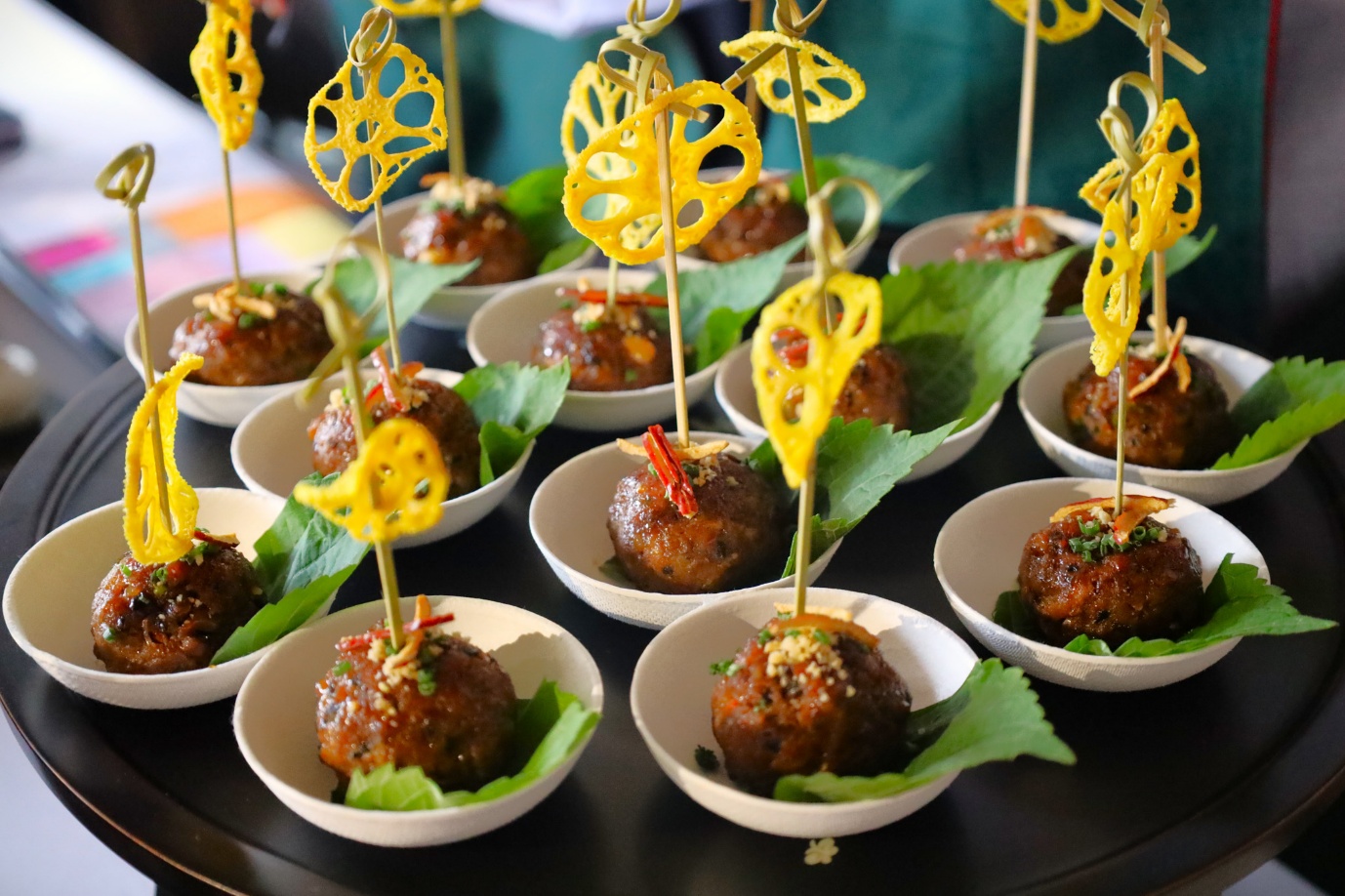
From fiery Korean noodles lining supermarket shelves to fermented sauces and jars of kimchi becoming pantry staples, Korean food—also known as Hansik, or now popularly termed K-Food—is no longer unfamiliar in South Africa. Once a niche curiosity, Korean flavours are now finding their way into everyday shopping baskets, while Korean restaurants continue to multiply across major cities, drawing diners eager for bold, spicy, and deeply layered tastes. As Korean culture gains momentum through music, film, and food, South African chefs are increasingly looking beyond trends to understand what makes Korean cuisine work—and how it might speak to their own culinary landscape.
That curiosity came into sharp focus in January, when chefs in South Africa gathered for a three-day professional culinary exchange exploring Korean cuisine not as a trend, but as a global culinary language with room for local reinterpretation.
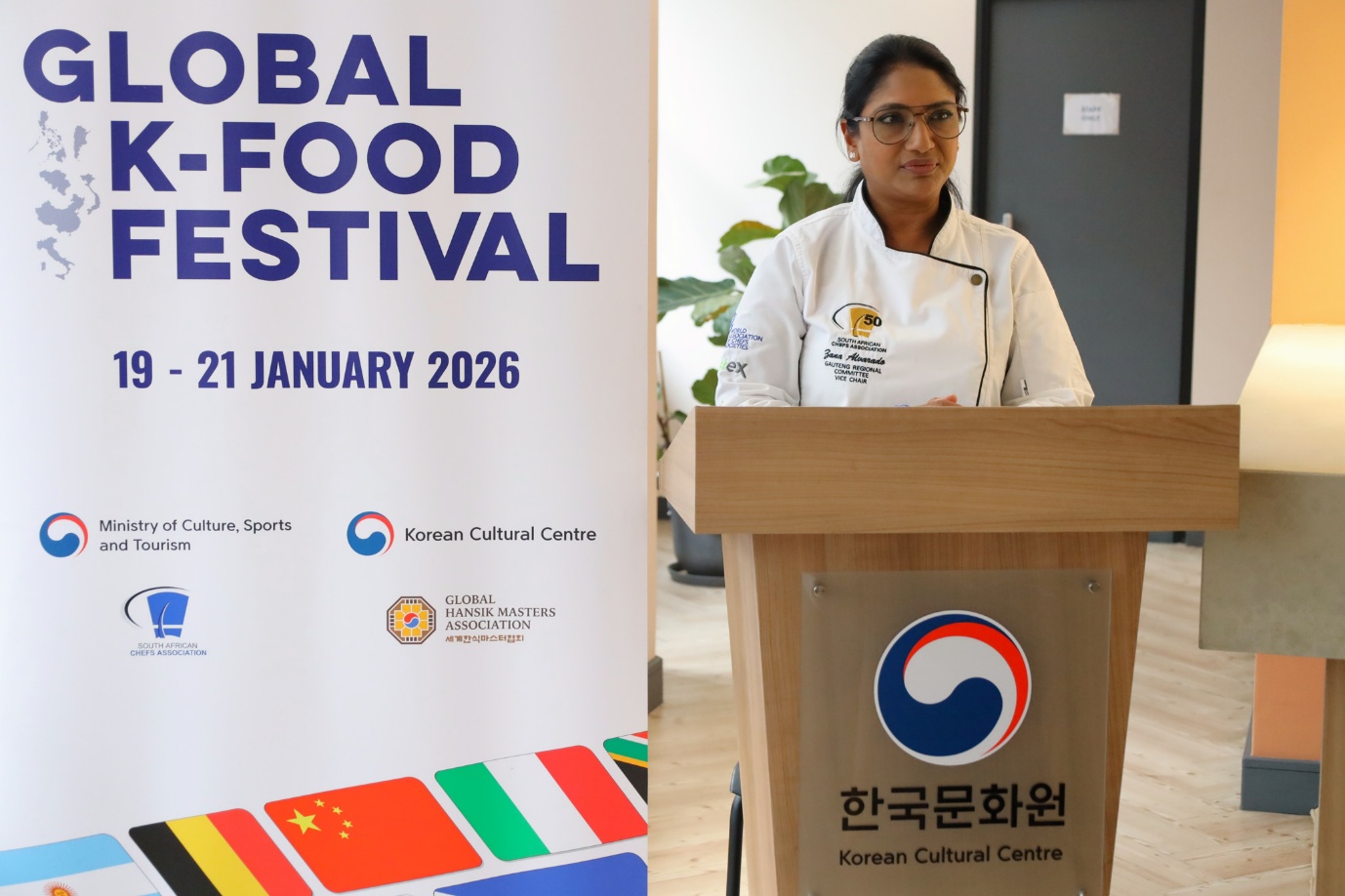
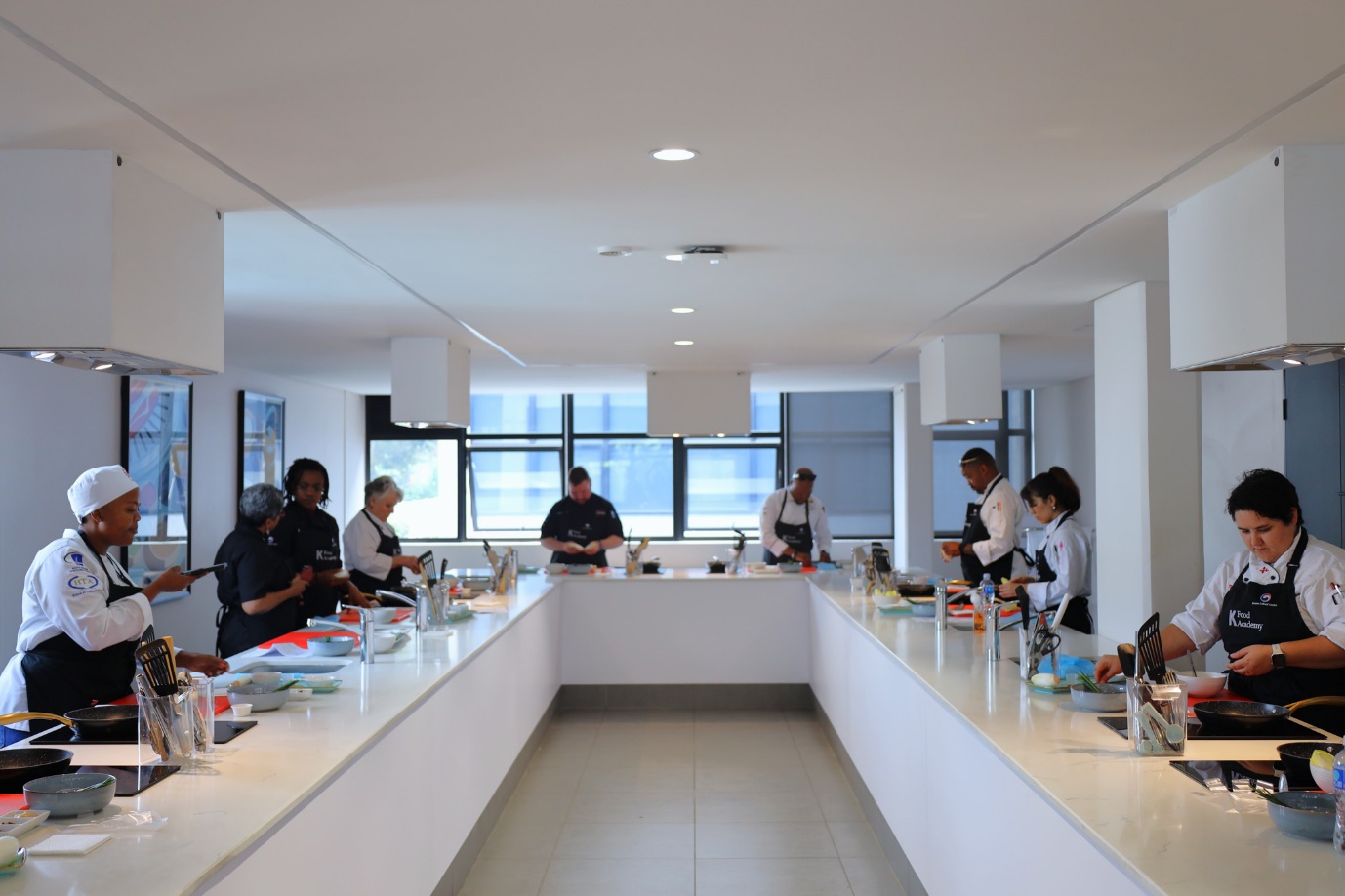
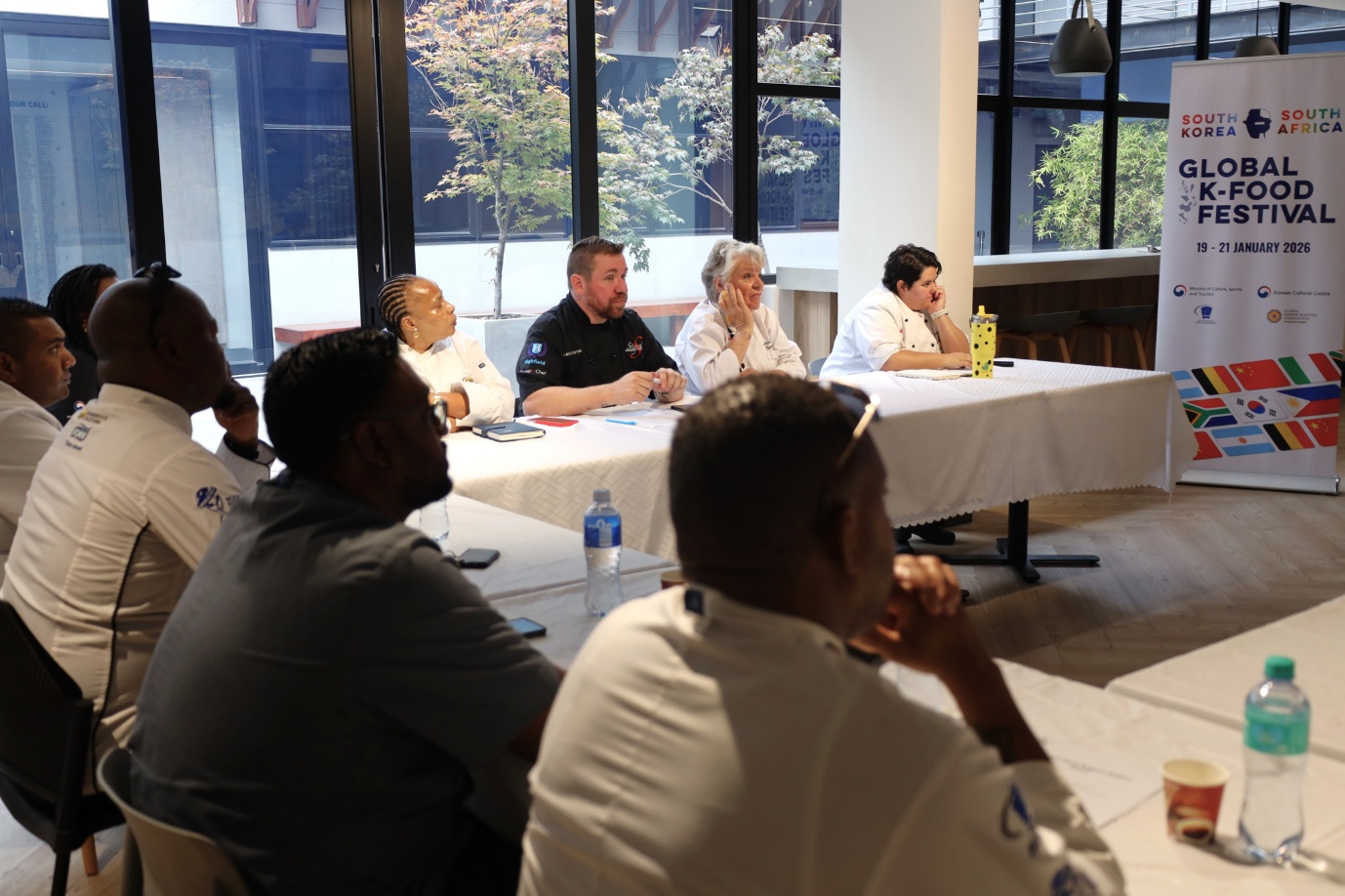
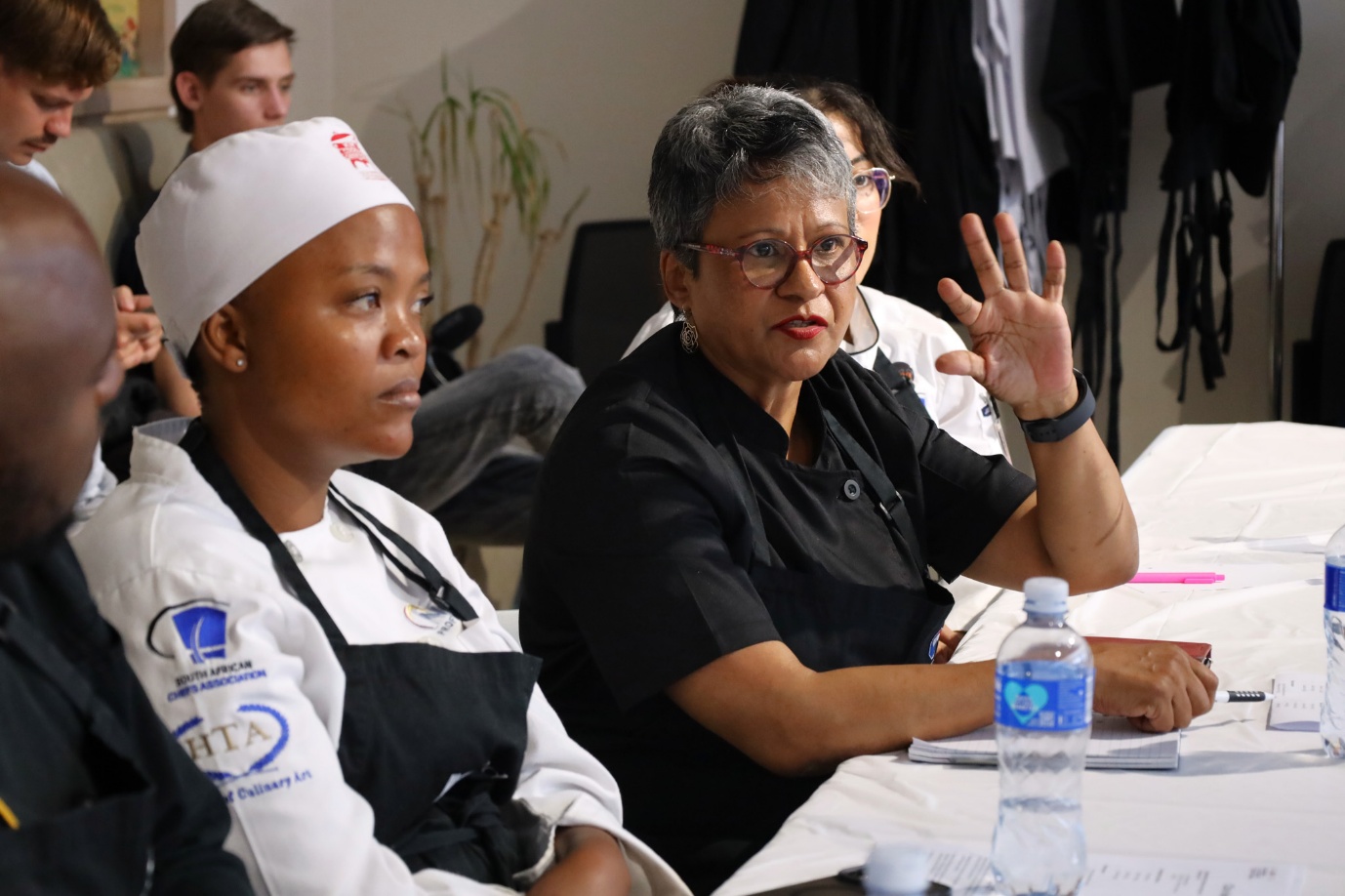
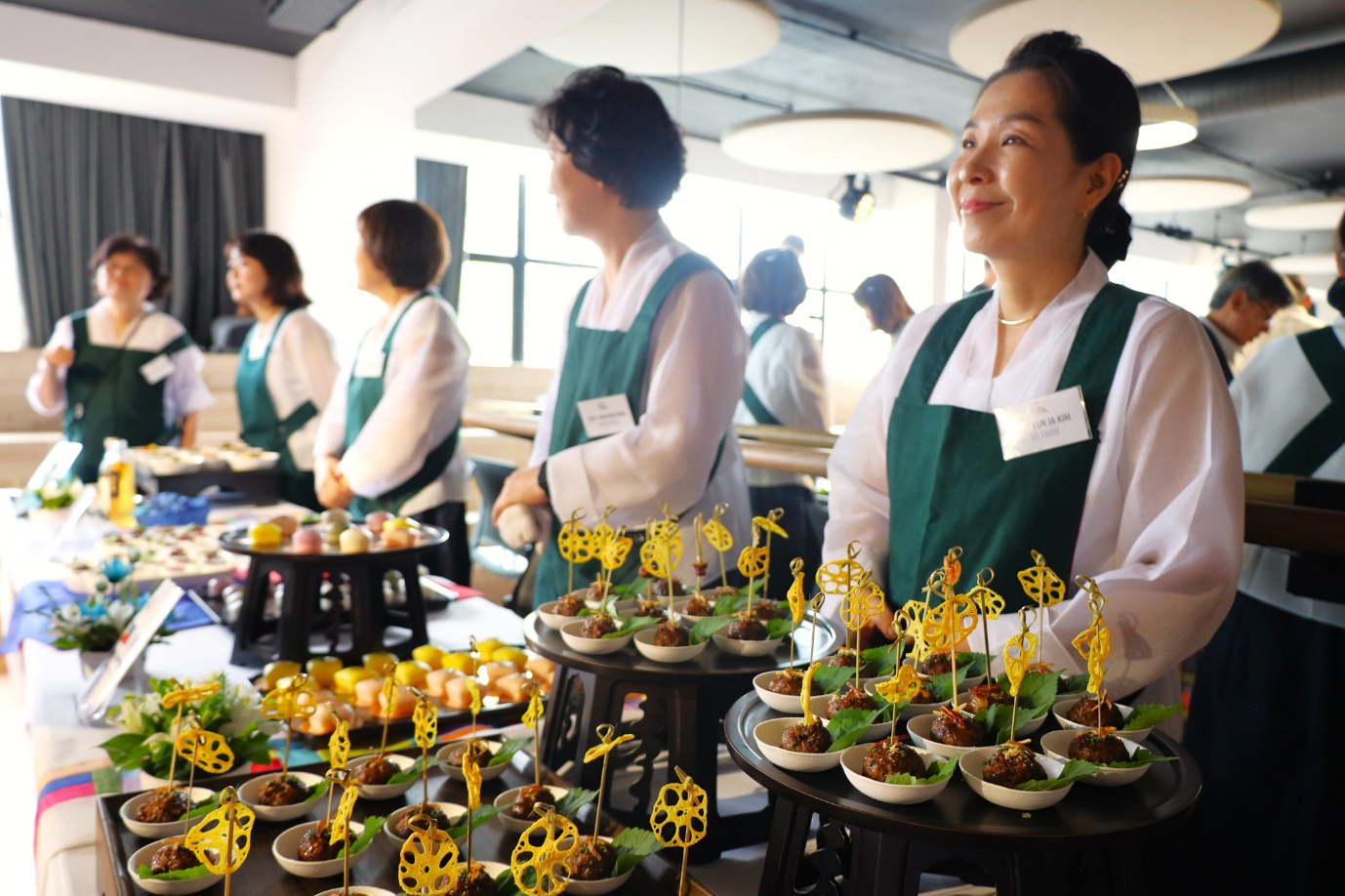
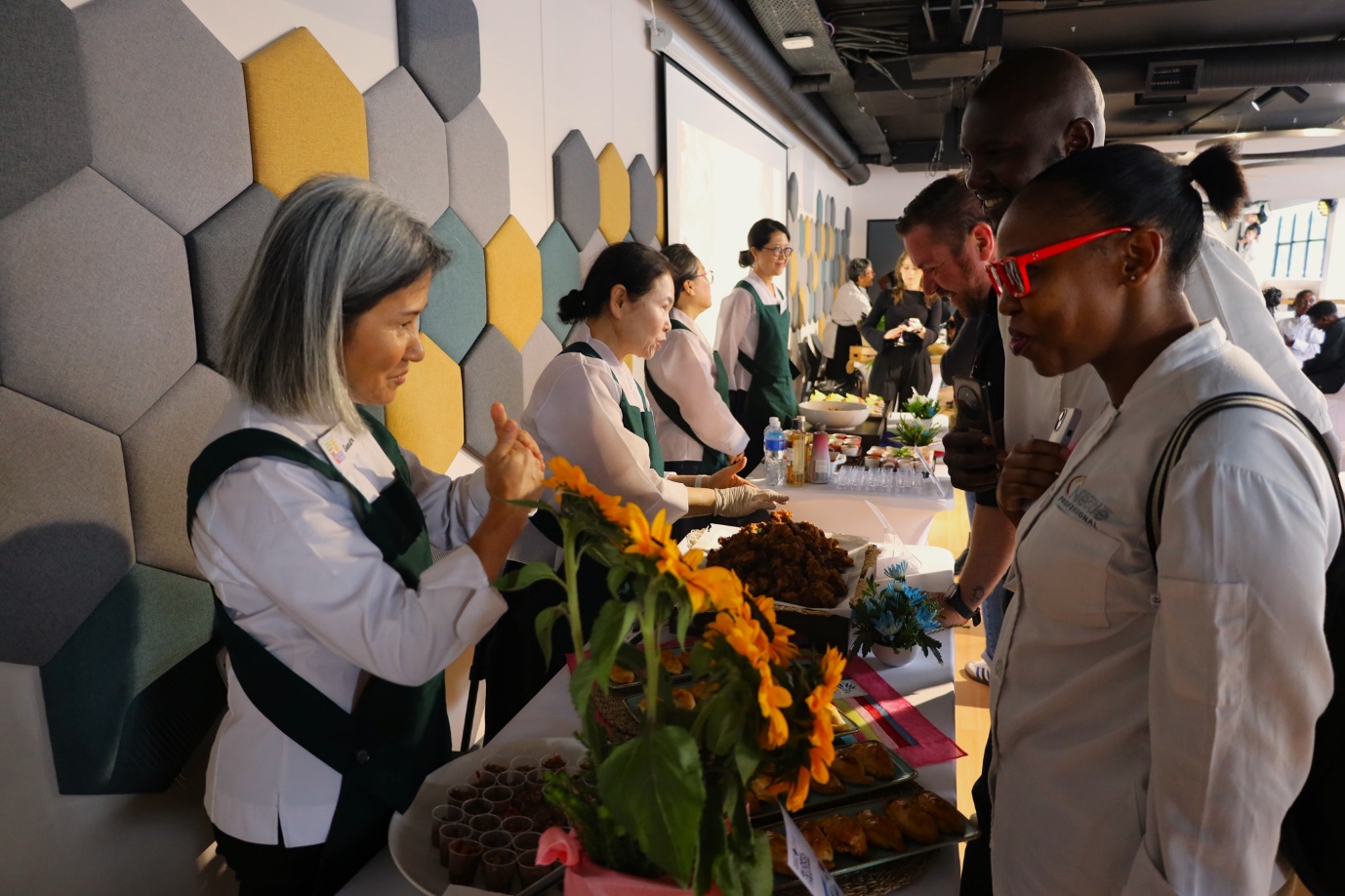
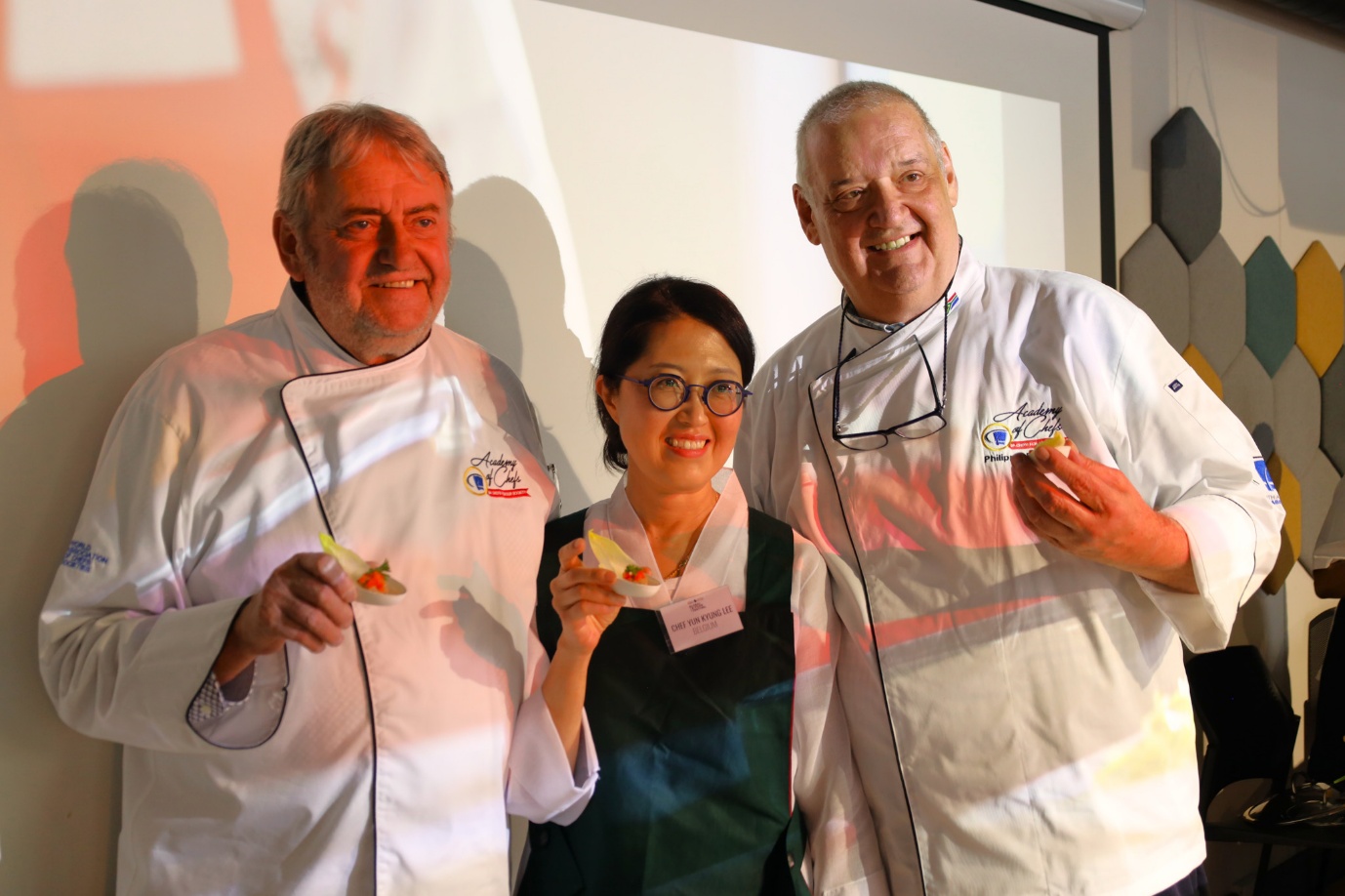
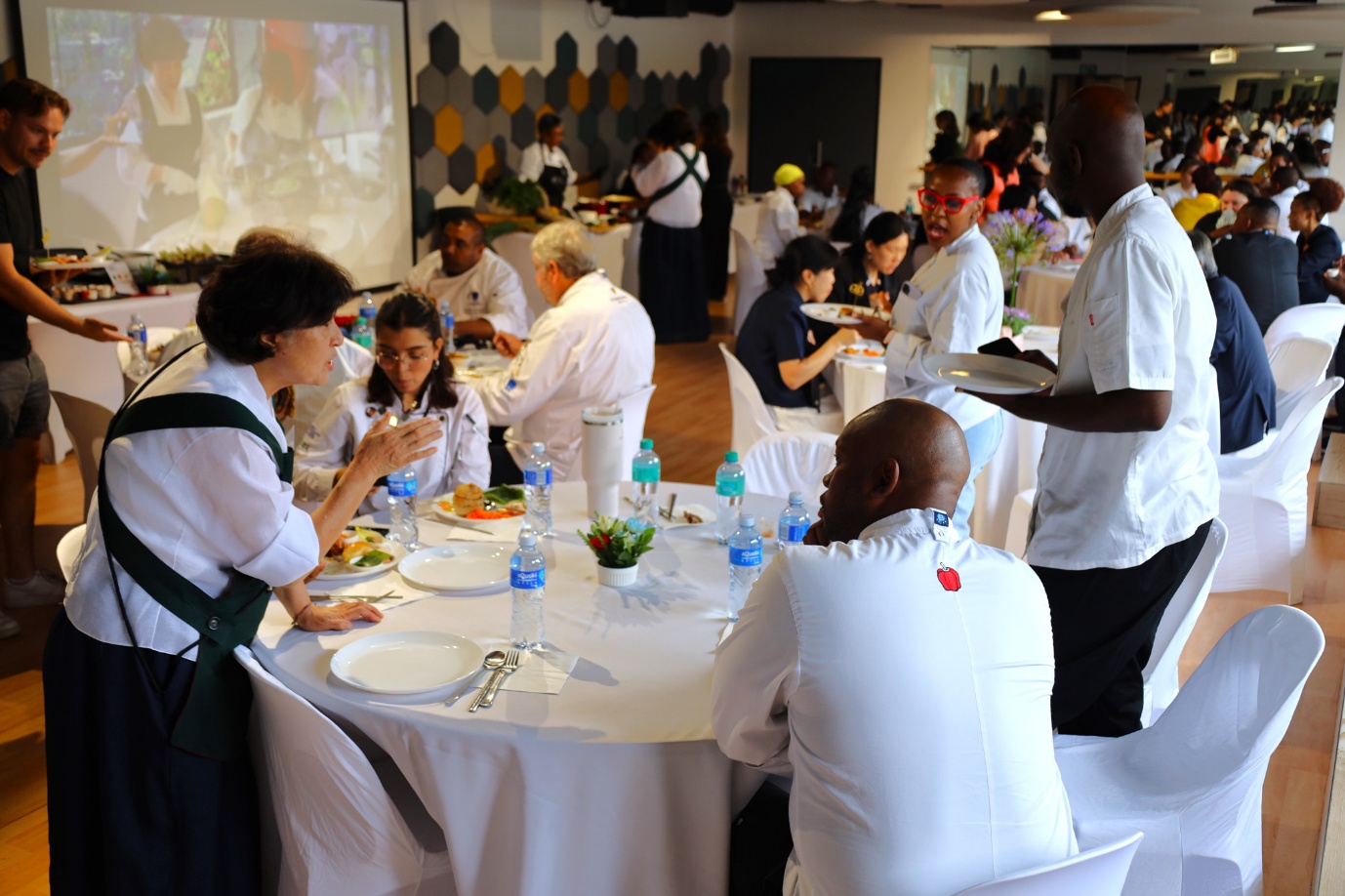
From 19 to 21 January, the Korean Cultural Centre in South Africa hosted the Global K-Food Festival, bringing together local chefs, culinary students, and Korean chefs for an intensive programme of talks, hands-on cooking sessions, and tastings. The event was developed in collaboration with the Global Hansik Masters Association and the South African Chefs Association (SACA).
Unlike a public food festival, the programme was designed specifically for professionals, focusing on how Korean cuisine works—from its structure and balance of flavours to its adaptability across cultures.
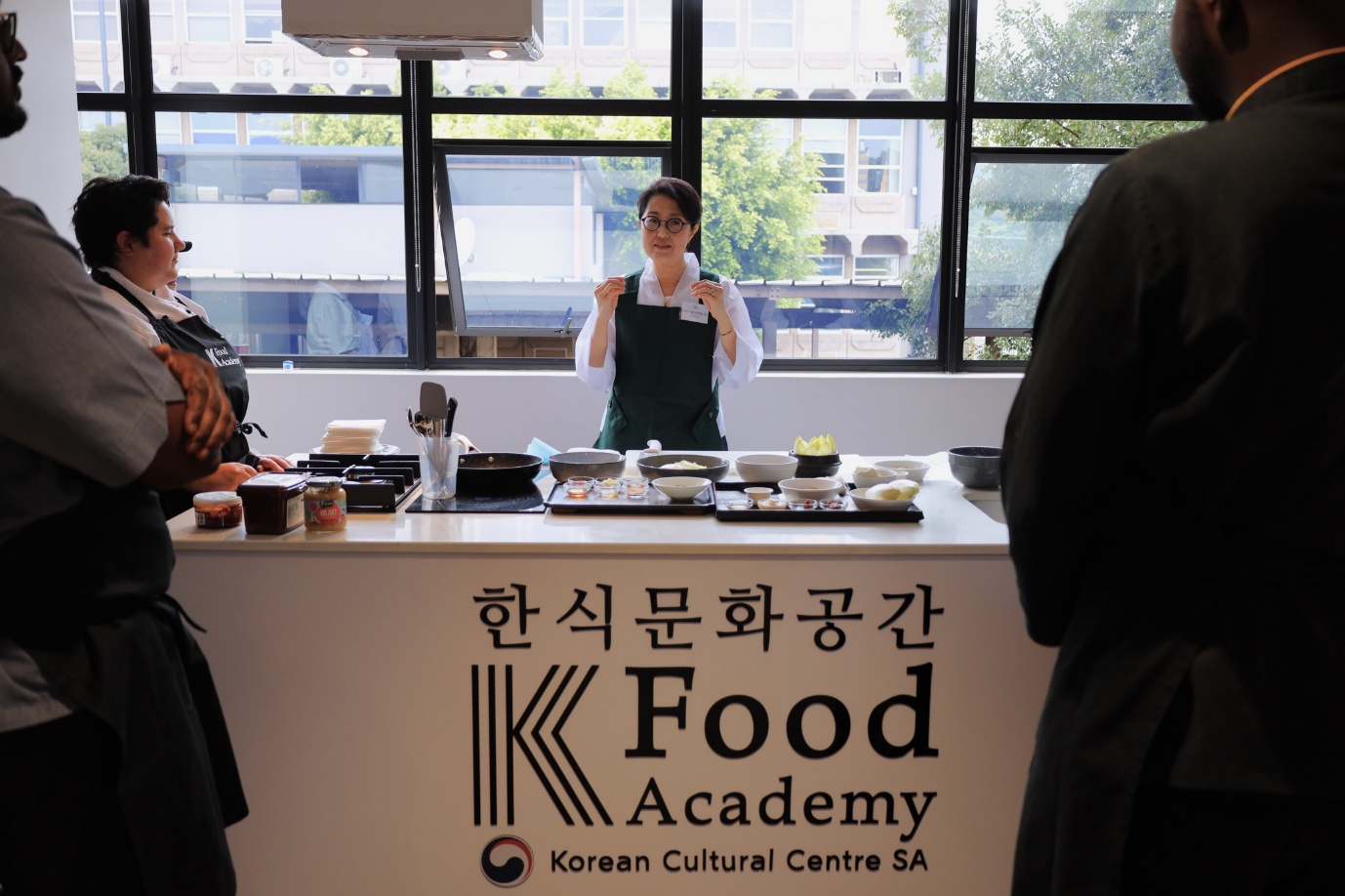
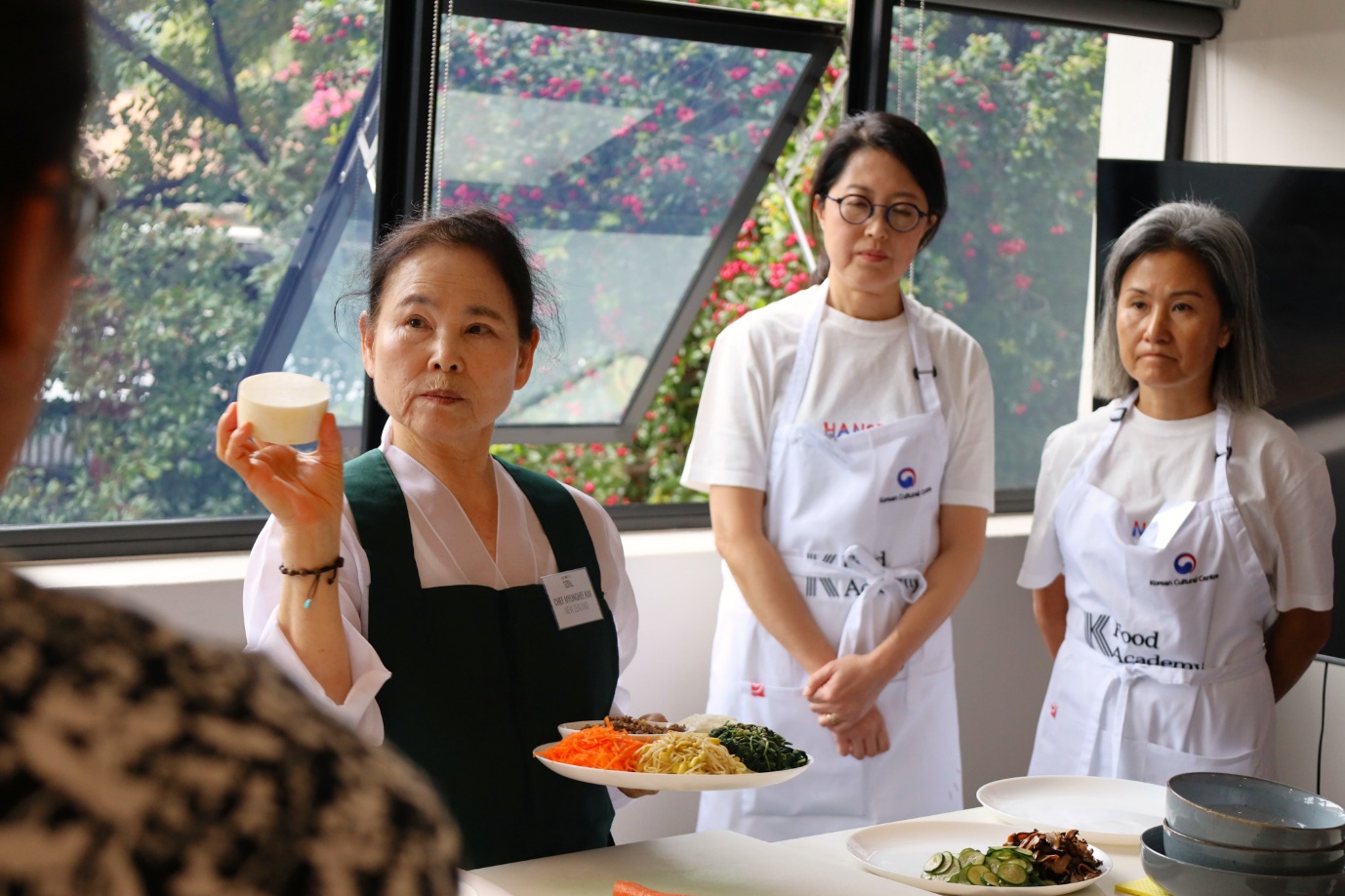
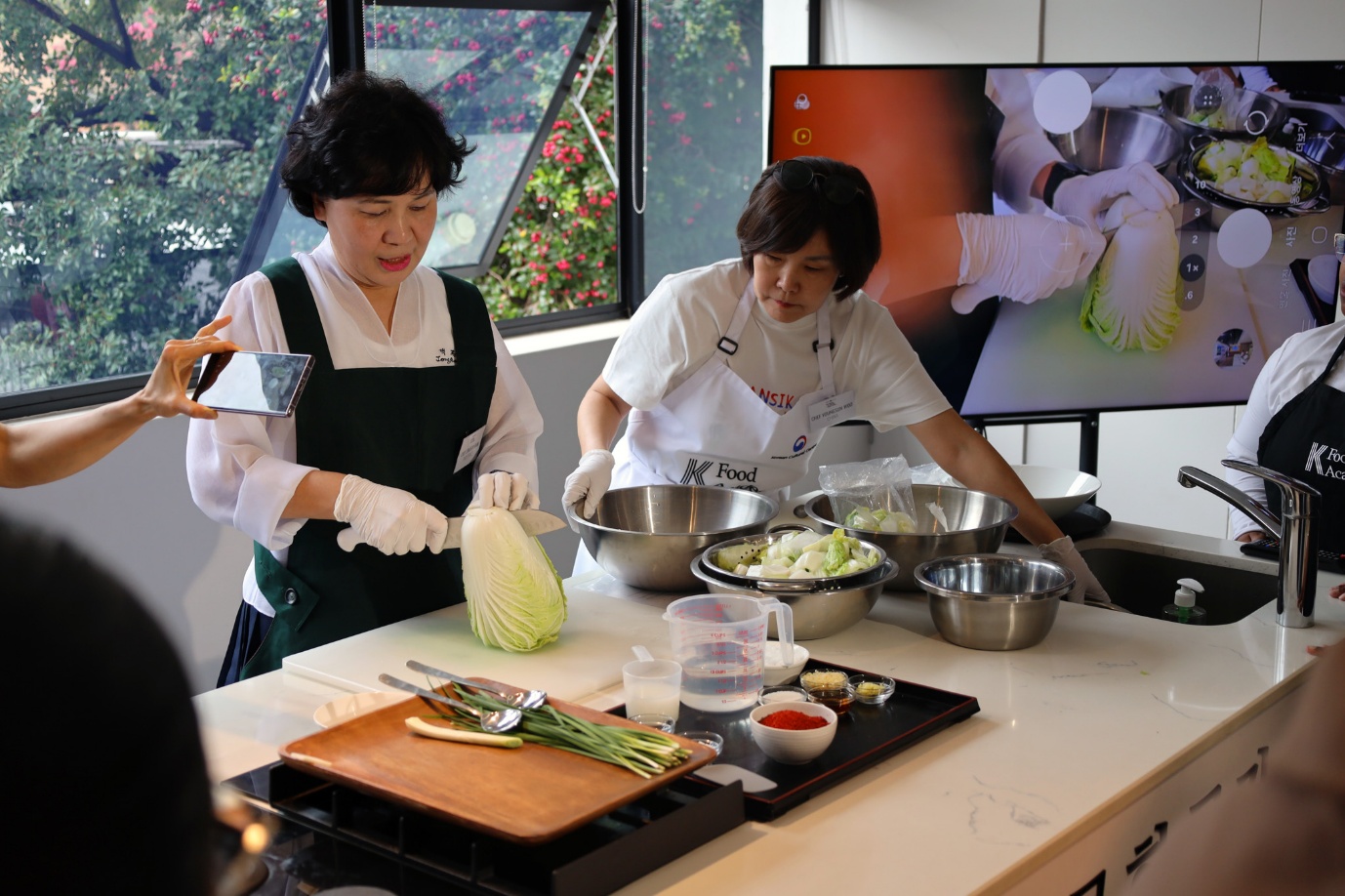
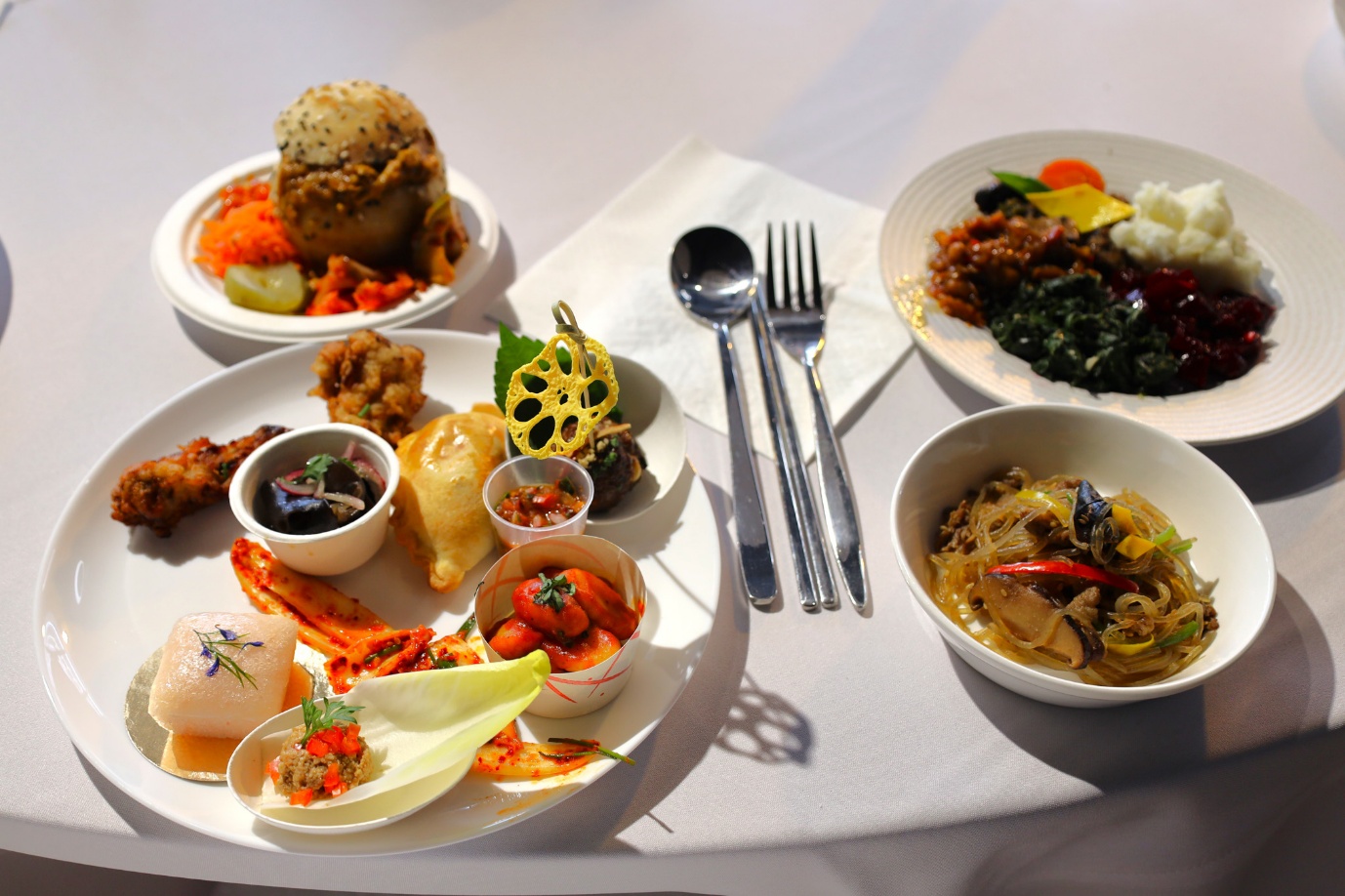
The first day centred on a Korean cuisine masterclass, introducing participants to the foundations of Korean cooking, including ingredients, preparation methods, and the role of fermented sauces. Through guided cooking sessions, chefs explored dishes such as bibimbap (a mixed rice dish topped with seasoned vegetables, protein, and sauce) and kimchi (fermented vegetables seasoned with chili, garlic, and spices), gaining insight into how balance, contrast, and layering shape Korean flavours.
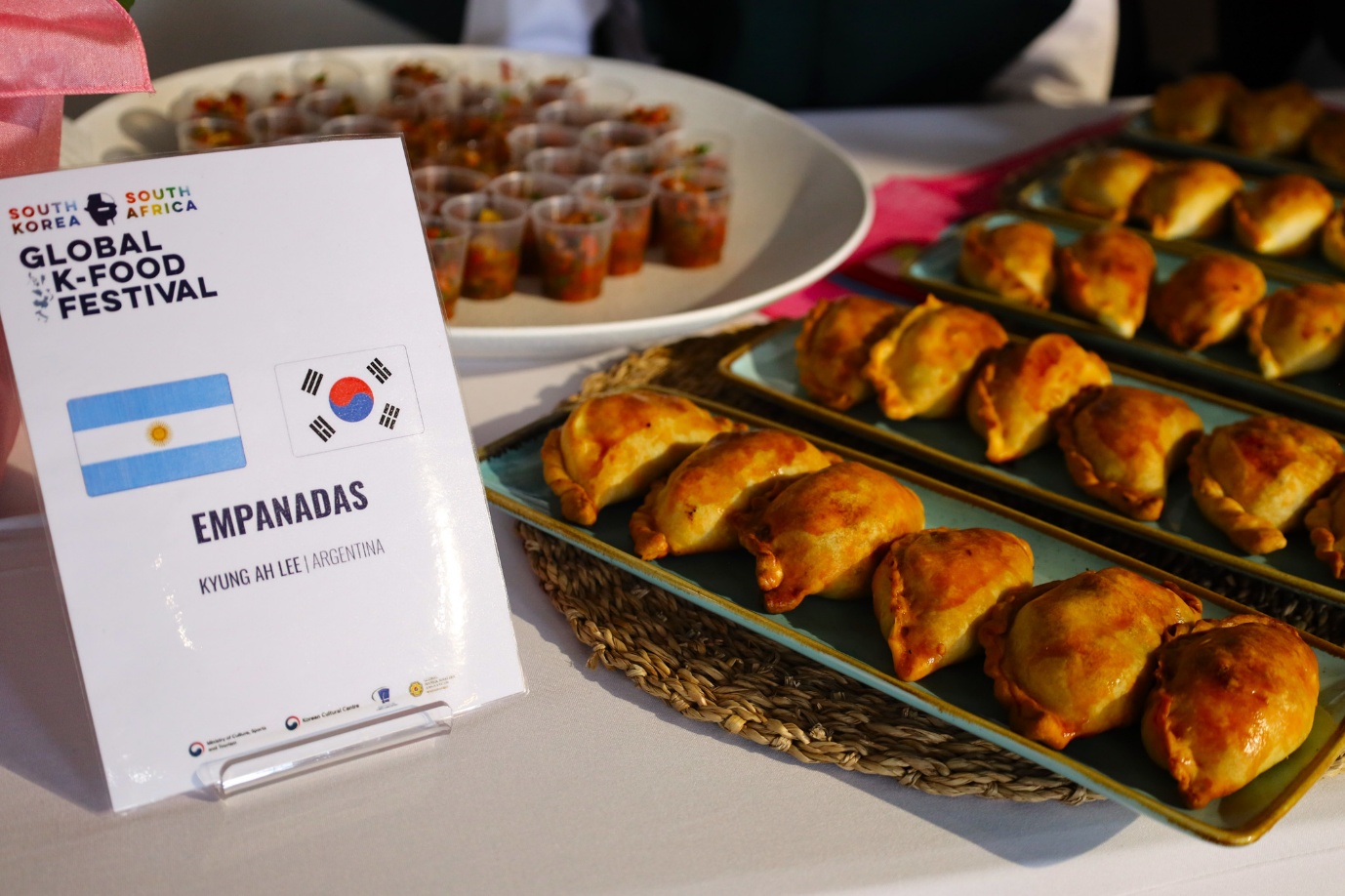
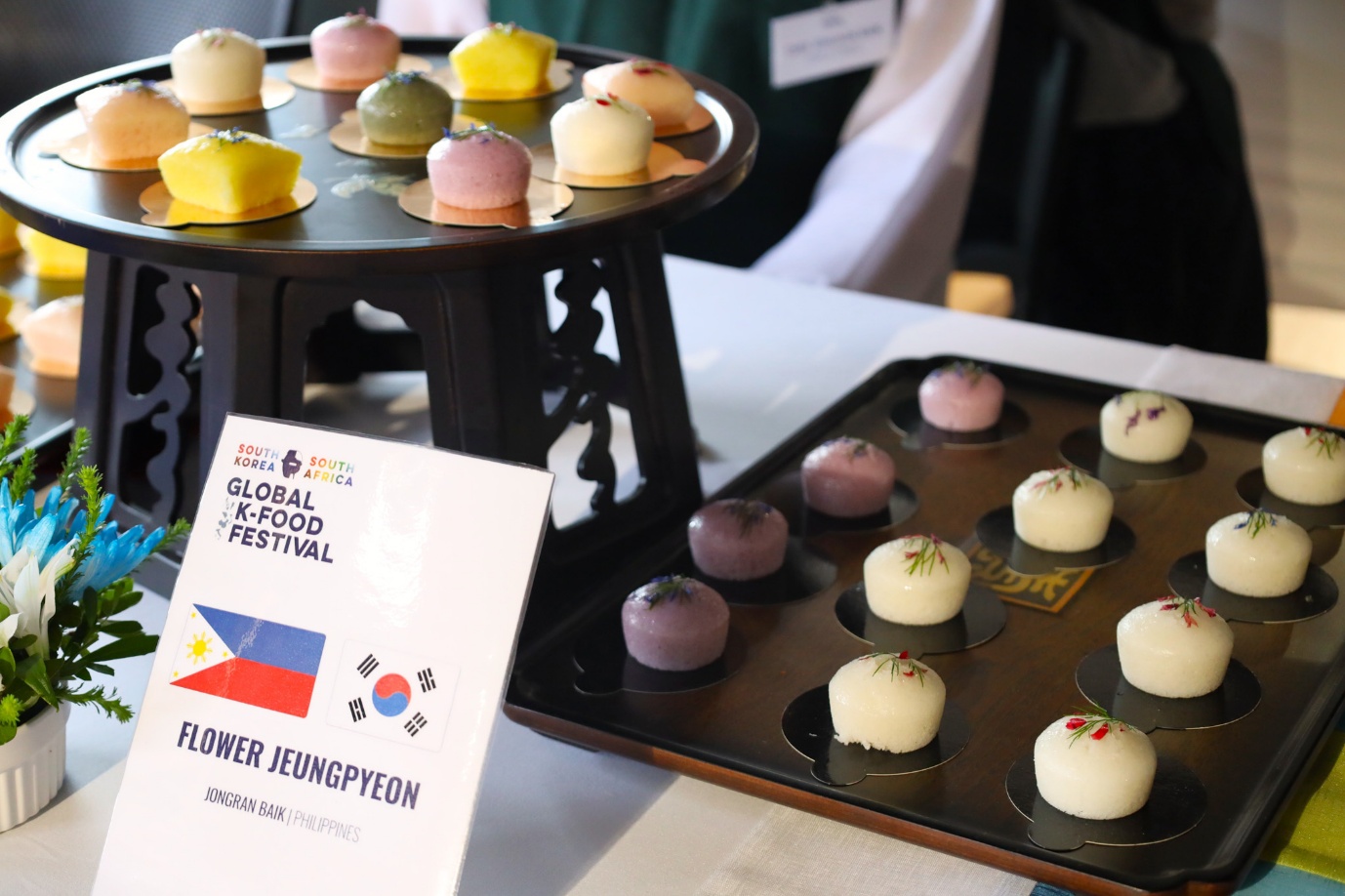
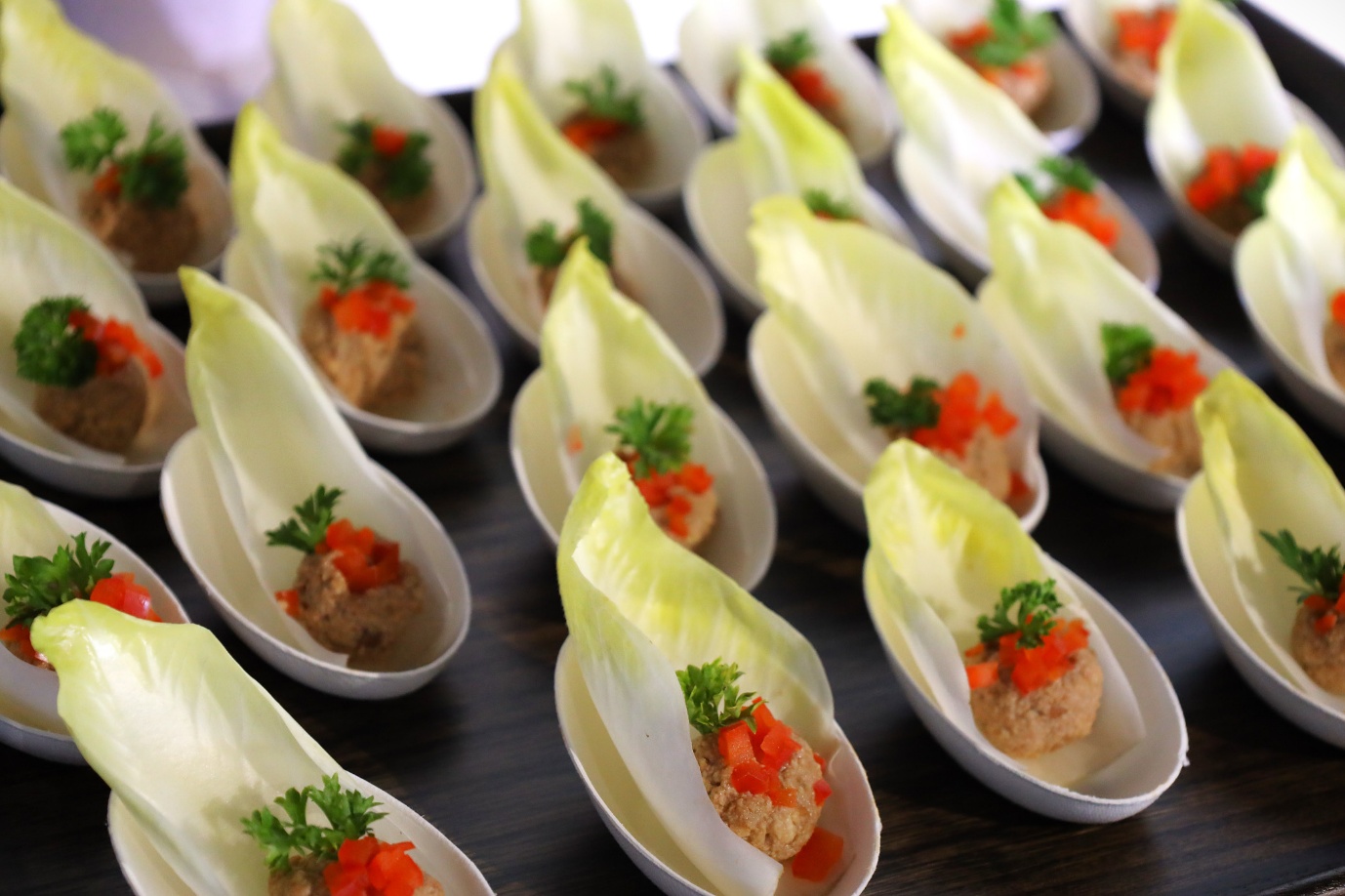
On the second day, the programme shifted toward creative adaptation. Korean chefs working internationally presented dishes that fused Korean techniques with elements from other culinary traditions, demonstrating how Korean cuisine can travel beyond its origins. From Western-style salads incorporating ssamjang (a fermented soybean-chili paste) to Southeast Asian-inspired dishes built around Korean marinades, discussions focused on flexibility, not imitation.
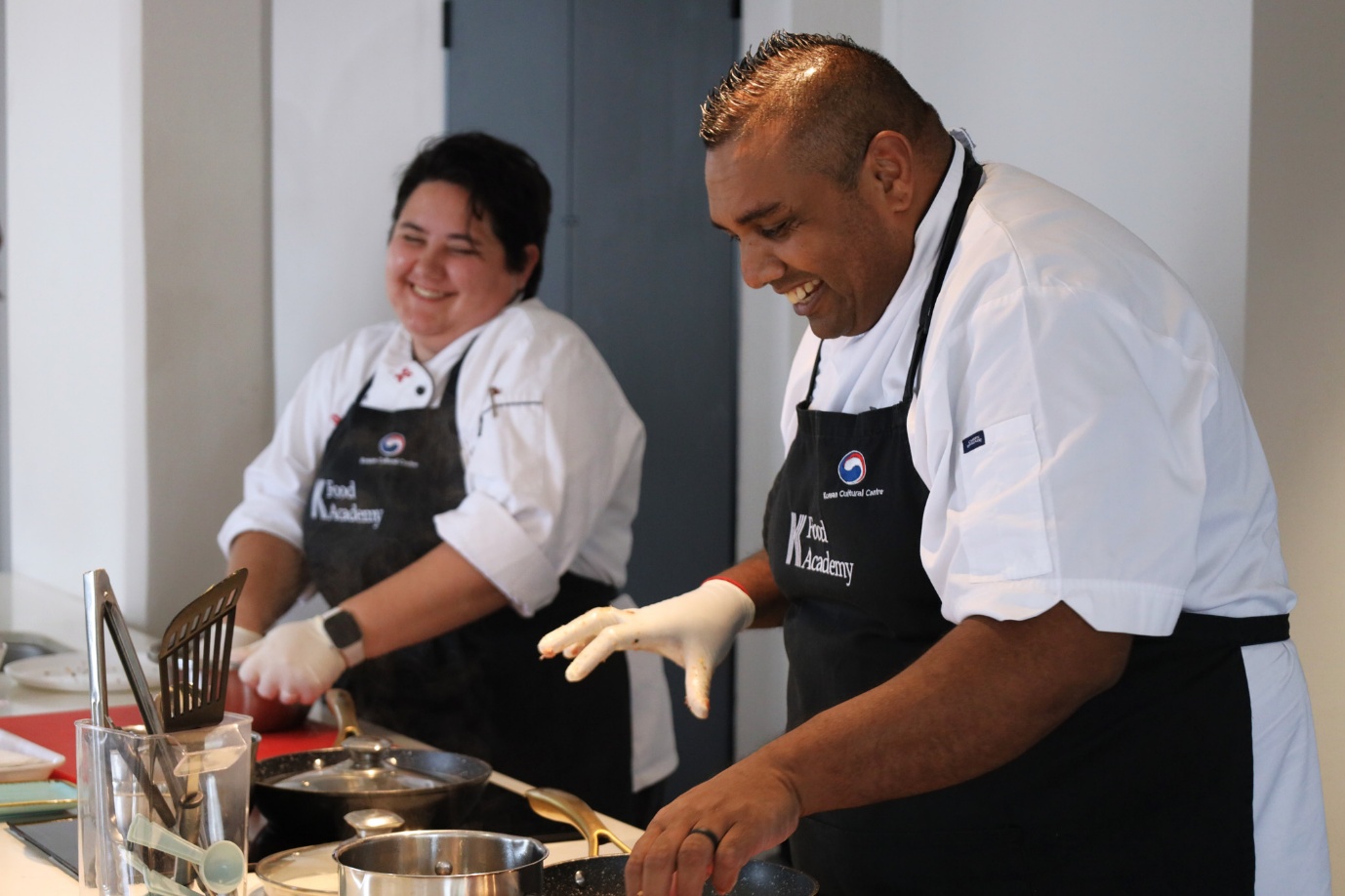
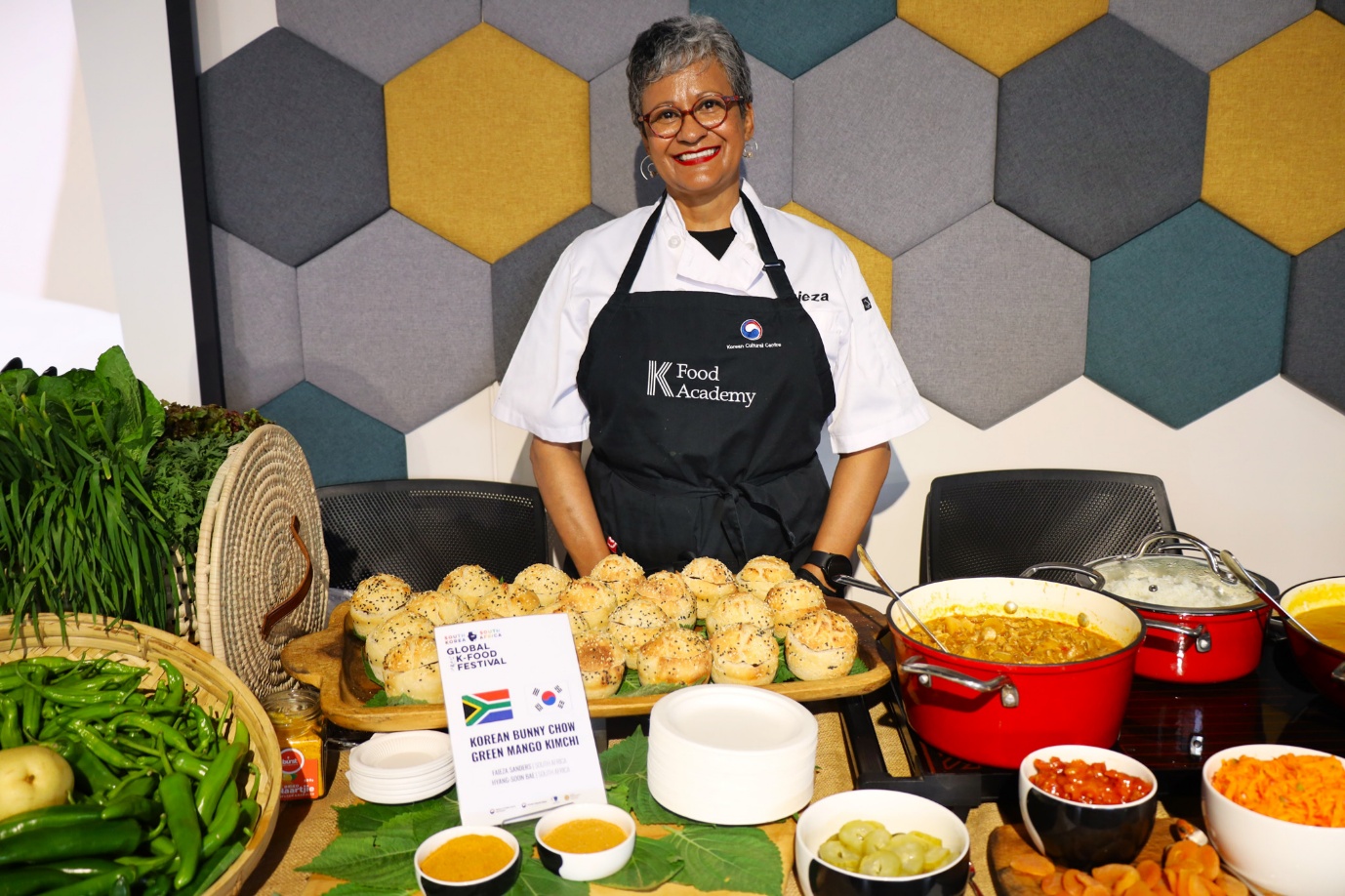
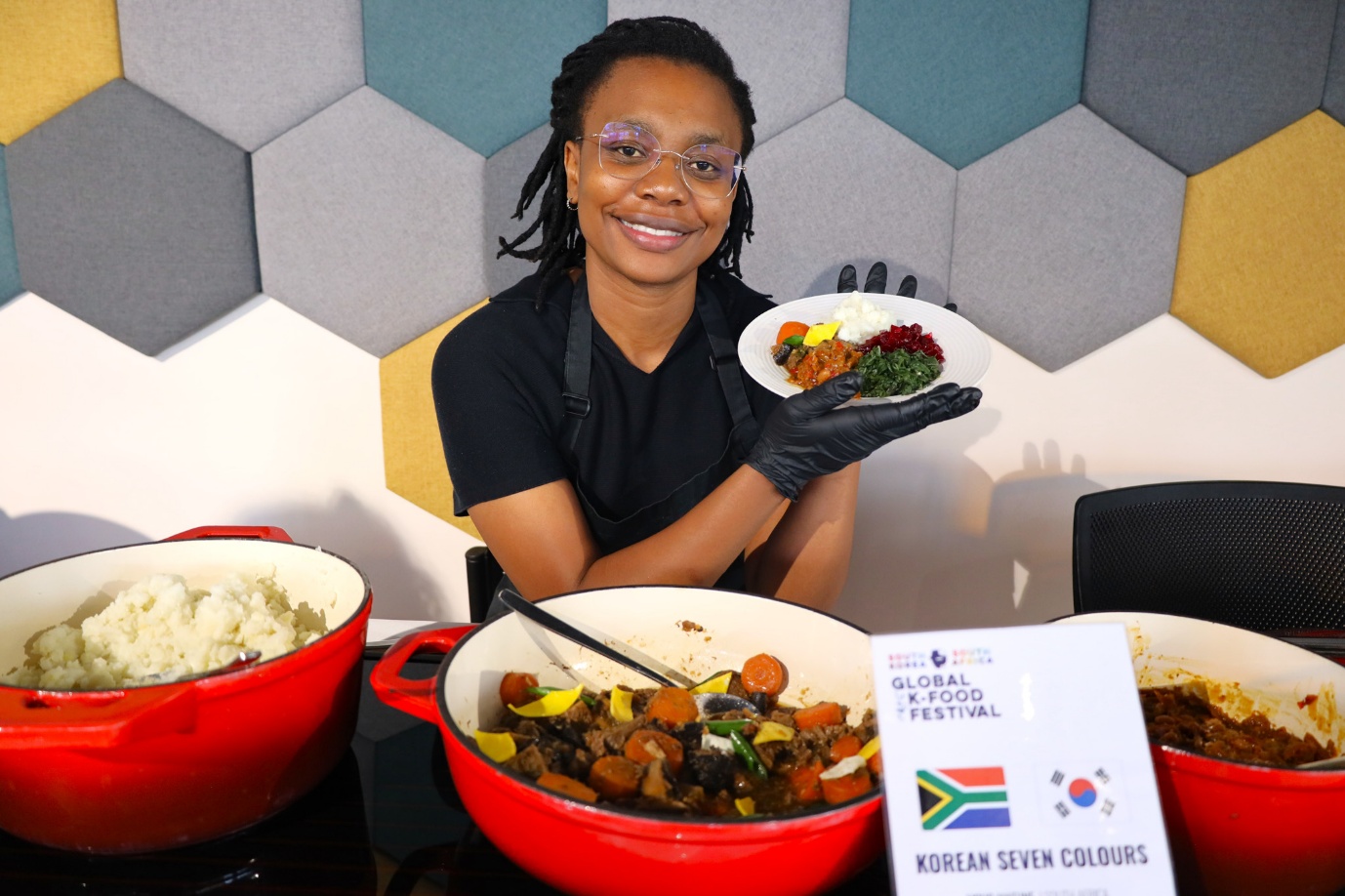
The exchange reached its most dynamic moment on the final day, when chefs from both countries presented Korean-inspired creations of their own. South African chefs, in particular, drew attention by reinterpreting familiar local dishes through Korean techniques. A highlight was a reimagined version of Seven Colours, a traditional South African home-style dish built around a variety of colourful components. Often compared visually to bibimbap, the dish was recreated using Korean sauces and preparation methods, revealing striking parallels between the two food cultures and earning strong reactions from fellow participants.
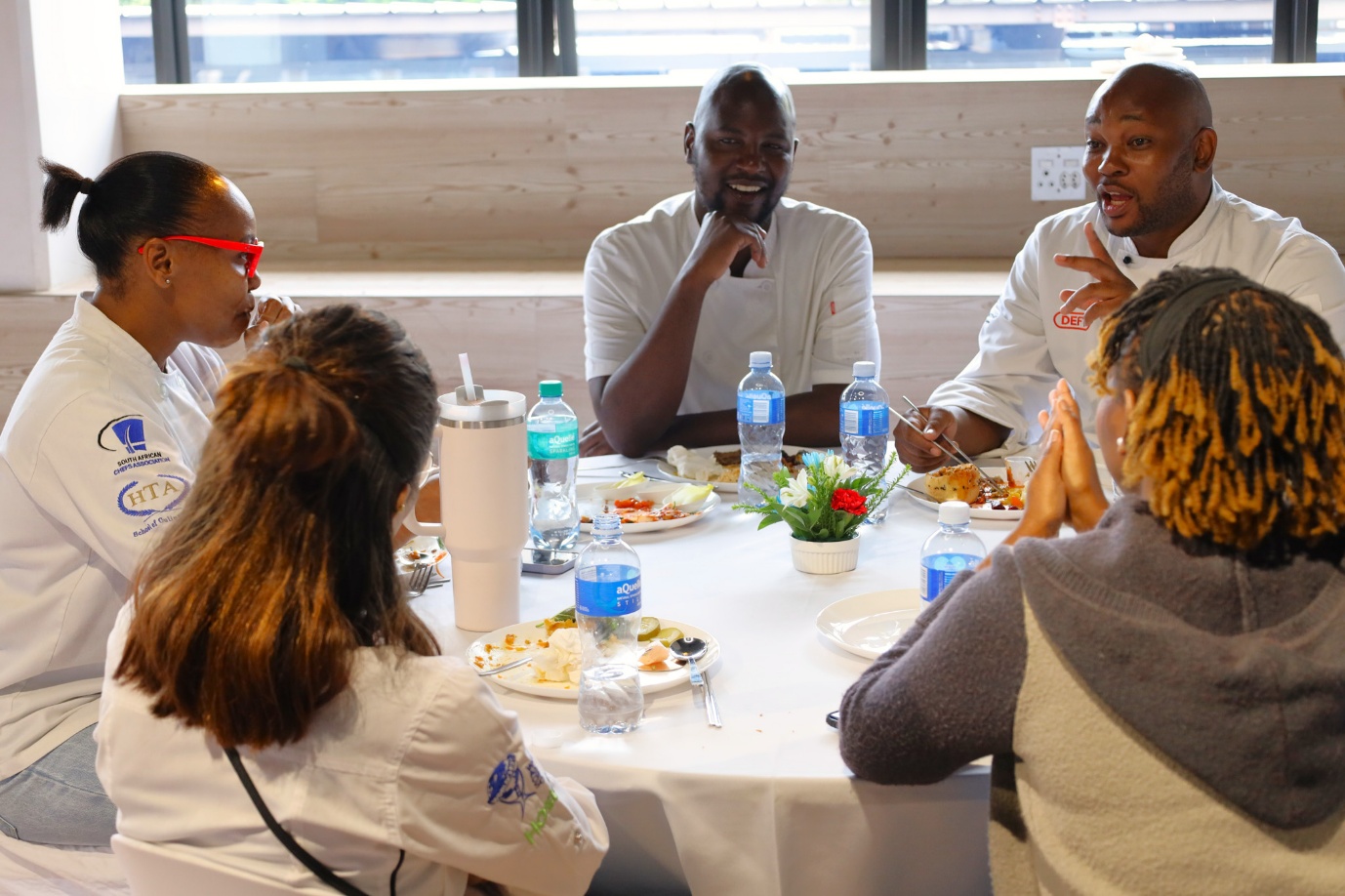
Many South African chefs noted that while Korean food has been attracting increasing attention locally, opportunities to engage deeply with its traditions have been rare. Participants said the programme helped them better understand the foundations of Korean cuisine—especially fermentation, sauces, and ingredient combinations—and offered practical ideas they plan to apply in their own kitchens.
By the end of the festival, one message was clear: Korean cuisine is no longer viewed simply as a regional specialty, but as a flexible, globally relevant culinary framework. Through direct collaboration and experimentation, the event opened new pathways for Korean flavours to take shape within South Africa’s evolving food scene.
Korean Cultural Centre in South Africa (KCCSA) | 주남아공한국문화원
• Website: https://sa.korean-culture.org/en
• YouTube: https://www.youtube.com/@kccsa
• Instagram: https://www.instagram.com/kcc.sa/
• Facebook: https://www.facebook.com/kccsa

 Facebook
 X
X
 YouTube
 Instagram
